Compare · By SubZeroRepairGreenwoodVillage.com
Two cooling systems in one cabinet
Ask what separates a Sub-Zero from an ordinary refrigerator and the honest answer is plumbing, not styling. A Sub-Zero combination unit cools its fresh-food side and its freezer with two separate refrigeration systems. Here is what that does, what it does not prove, and what it changes when something breaks.
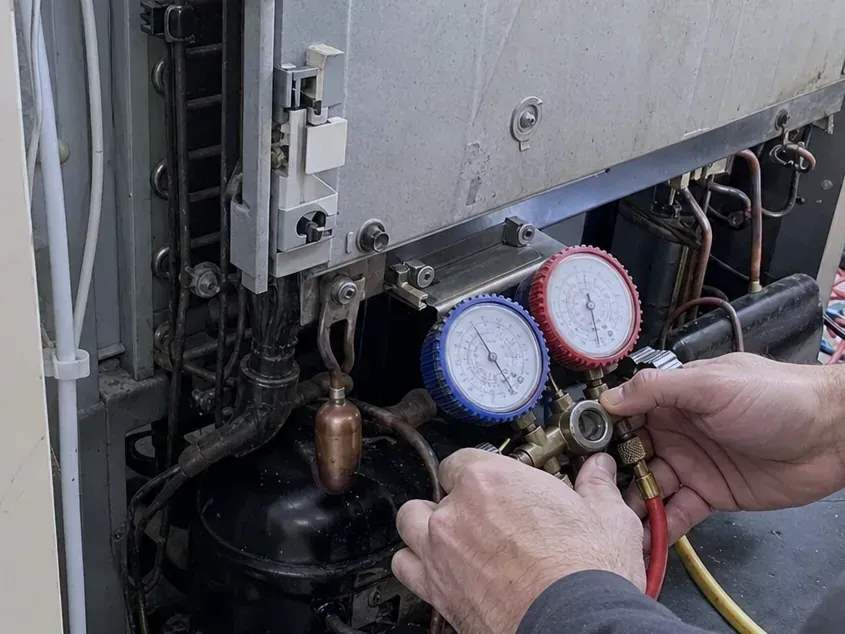
One system, or two
Most ordinary refrigerators have one compressor and one cold coil, the evaporator, usually on the freezer side. Sub-Zero’s own explanation of the alternative is blunt: in a single-compressor unit, dry air from the freezer is often circulated into the refrigerator to keep it cold. Sub-Zero instead fits two compressors and two evaporators in every combination refrigerator-freezer; each compressor runs only when its own compartment needs cooling.
What Sub-Zero says it gives you
- Separate settings. Each compartment can be set to a temperature of its own.
- No shared smells. Sub-Zero describes no transfer of fresh-food odors to frozen food and ice: the air never crosses between compartments.
- Moist fresh-food air. In Sub-Zero’s words, the system does not freeze the moisture out of the air in the fresh-food section.
Does food really last longer?
Sub-Zero says it does. We know of no independent test we could point you to, so we will not put a number on it. The mechanism, though, is easy to follow: produce dries and wilts in dry air, and a fresh-food compartment that is not fed freezer air keeps more of its humidity. Whether that adds days to your lettuce depends on how it is stored as much as on the machine.
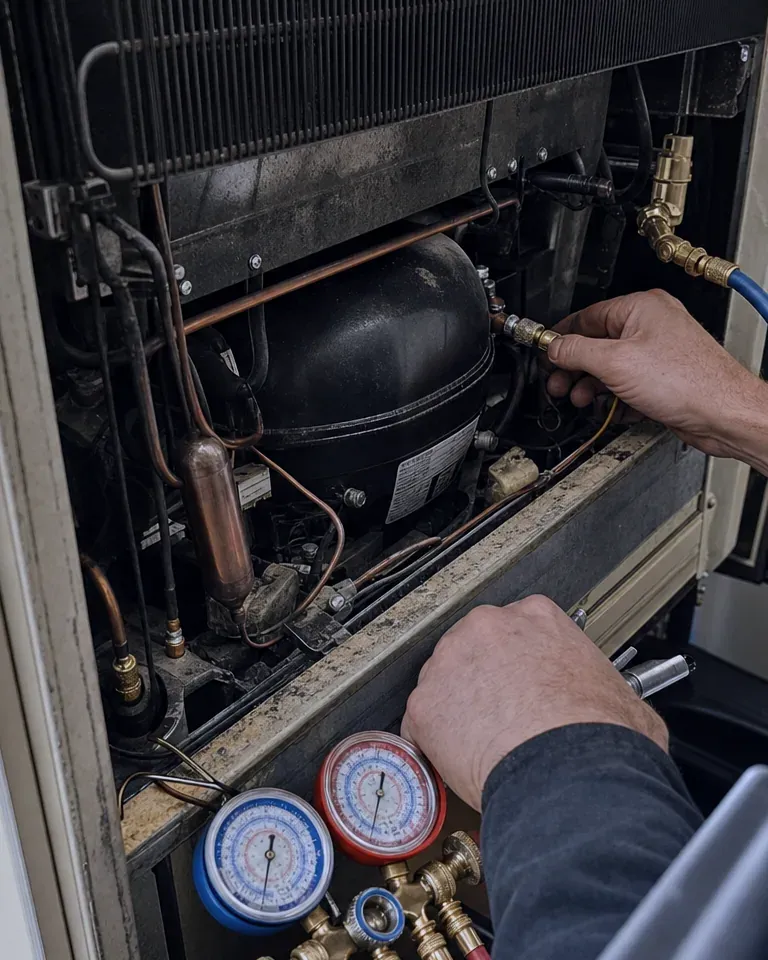
What two systems mean when something fails
Because the sides are independent, faults usually show on one side only: a warm fresh-food section with a hard-frozen freezer, or the reverse. Diagnosis covers both systems, since a shared part such as the control board can still affect each. A sealed-system repair on one side is priced on its own; compressor or sealed-system work typically runs $1,500–$3,020, a range rather than a quote, with the exact figure agreed before work starts.
Which side is in trouble?
Put a thermometer in each compartment. Sub-Zero recommends 38°F in the refrigerator and 0°F in the freezer. A new setting needs 24 hours to show its effect, and Sub-Zero warns that food stored above 45°F is unsafe. Give us both readings when you call.
Dual refrigeration questions
Does every Sub-Zero have dual refrigeration?
Sub-Zero lists it on its Classic, Designer and PRO models, and its own FAQ says every combination refrigerator-freezer has two compressors. A single-purpose unit, such as an all-refrigerator or an all-freezer column, has one compartment, so it has just one cooling system serving it.
Are two compressors twice as likely to fail?
There are more parts, but neither compressor carries two compartments: each runs only when its own side asks for cooling. That is the heart of Sub-Zero’s case for the design. And when one side does fail, the other usually keeps working, which gives you somewhere to move the food.
One side warm, the other fine?
That is a dual-refrigeration fault. Call SubZeroRepairGreenwoodVillage.com at (720) 702-9054, or book online.